Most home networks can use IPv4 and IPv6 at the same time. When one path is misconfigured, an application may pause before trying the other, but disabling IPv6 immediately removes evidence.
Confirm whether IPv6 is present#
Check the router status and the device network details. Link-local addresses beginning with fe80 are normal for the local segment; global connectivity requires additional addressing, a route, and working DNS.
For this step, write down what you expected, what actually happened, and whether the result was repeatable. A single successful attempt can be useful, but it is not yet a stable conclusion. Repeat the smallest safe test before moving to the next layer.
Test both protocol paths#
Use a reputable dual-stack test and compare a service that supports both protocols. Record whether failure occurs on one device, every device, or only one browser. That scope changes the likely owner of the problem.
For this step, write down what you expected, what actually happened, and whether the result was repeatable. A single successful attempt can be useful, but it is not yet a stable conclusion. Repeat the smallest safe test before moving to the next layer.
Check the router before the client#
Confirm that the provider delegated IPv6 service and that router advertisements are enabled as the manufacturer expects. Avoid copying static prefixes from examples because delegated networks can change.
For this step, write down what you expected, what actually happened, and whether the result was repeatable. A single successful attempt can be useful, but it is not yet a stable conclusion. Repeat the smallest safe test before moving to the next layer.
Preserve dual-stack behavior#
Update router firmware and operating systems before using workarounds. If support asks for a temporary IPv6-off test, document it, retest the same destination, and restore the original setting after collecting the result.
For this step, write down what you expected, what actually happened, and whether the result was repeatable. A single successful attempt can be useful, but it is not yet a stable conclusion. Repeat the smallest safe test before moving to the next layer.
How to keep the test controlled#
A home network crosses several administrative boundaries: the device, local link, router, access equipment, provider, and destination. A result should identify the last layer known to work. Keep local tests separate from internet tests, note whether Ethernet and Wi-Fi agree, and avoid factory resets until settings and credentials are backed up. If equipment belongs to the provider, confirm which changes you are allowed to make.
Use a simple worksheet with five columns: time, starting condition, action, observable result, and rollback status. Attach screenshots only when they show the relevant setting or error. This record prevents circular troubleshooting and gives support a concise history of what has already been ruled out.
Decision checkpoint#
Escalate with timestamps, test URLs, affected devices, and the difference between IPv4 and IPv6. That evidence is more useful than a permanent disable switch.
What this guide does not prove#
An IPv6 test cannot diagnose Wi-Fi interference or prove that every external route is healthy. Private provider mechanisms can also make the router interface differ from generic instructions.
Document the result#
Keep a short record with the date, device and software versions, original setting, change, result, and whether you restored it. Remove account names, addresses, serial numbers, public IP addresses, and other personal data before sharing screenshots with a forum or support team.
Related Portal Tech field guides#
References#
Questions readers usually ask#
Should I change several settings to save time?#
No. Multiple simultaneous changes make the result difficult to interpret and can create a second problem. Preserve a baseline and retest after each meaningful change.
When should I contact support?#
Contact the responsible provider or manufacturer when the fault is reproducible, the documented safe steps are exhausted, the equipment reports a safety warning, or the required action exceeds your access or experience.
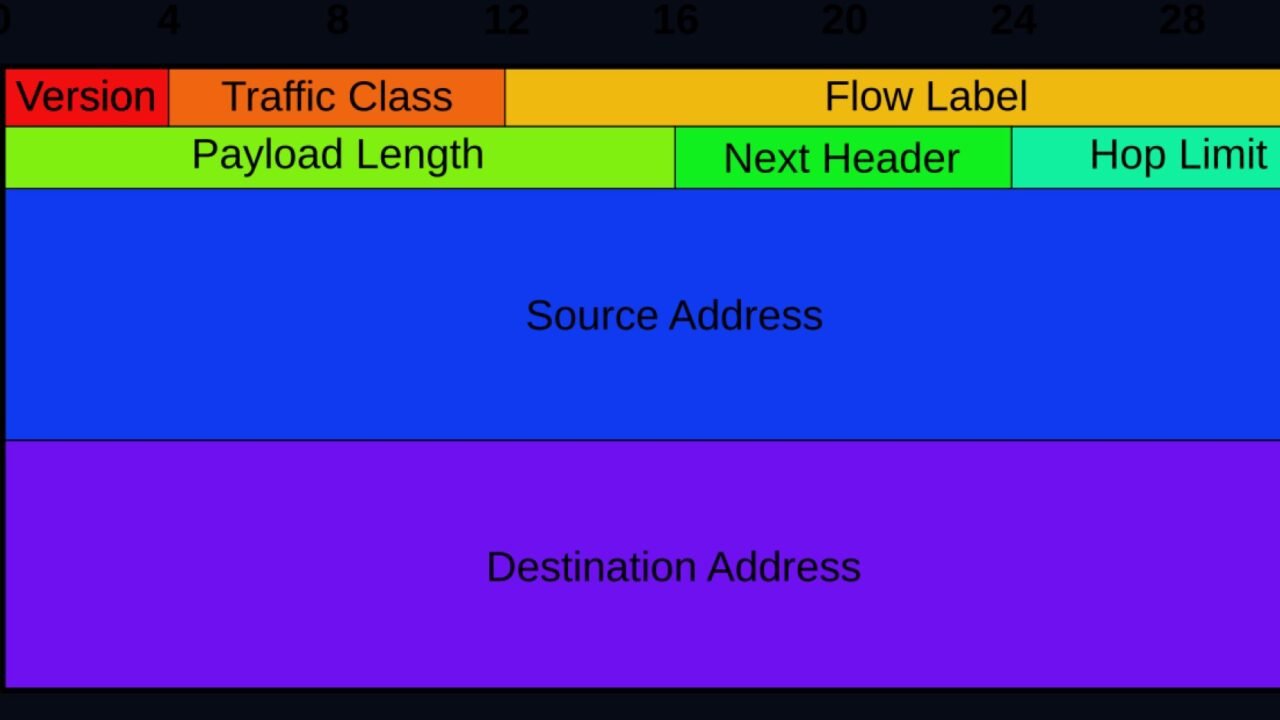
Featured image: IPv6 header rv1.svg — CC BY-SA 3.0, via Wikimedia Commons. Cropped for this article. Source and licence details.