A wider channel can carry more data under clean conditions, but it also occupies more spectrum and has more opportunities to encounter interference. Reliability can improve when the network uses less width.
Read the environment before selecting#
Use the router’s own diagnostics or a reputable analyzer to see nearby networks. A scan is a snapshot; repeat it at the problem time and at the problem location.
For this step, write down what you expected, what actually happened, and whether the result was repeatable. A single successful attempt can be useful, but it is not yet a stable conclusion. Repeat the smallest safe test before moving to the next layer.
Keep 2.4 GHz conservative#
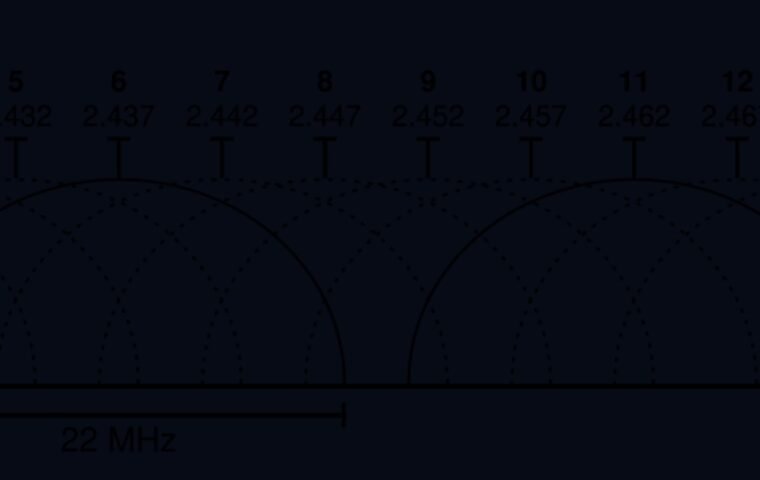
In crowded areas, 20 MHz reduces overlap and usually improves coexistence. Selecting an unusual channel because it looks empty can create partial overlap that is harder for neighboring networks to coordinate.
For this step, write down what you expected, what actually happened, and whether the result was repeatable. A single successful attempt can be useful, but it is not yet a stable conclusion. Repeat the smallest safe test before moving to the next layer.
Let 5 and 6 GHz adapt#
Automatic selection is a sensible starting point on maintained equipment. Test wider modes only with capable clients and record stability, latency, and retries as well as peak speed.
For this step, write down what you expected, what actually happened, and whether the result was repeatable. A single successful attempt can be useful, but it is not yet a stable conclusion. Repeat the smallest safe test before moving to the next layer.
Distinguish congestion from weak signal#
Strong signal with unstable latency during busy periods suggests airtime competition. Weak signal that fails consistently farther away points toward placement or coverage. The remedies are different.
For this step, write down what you expected, what actually happened, and whether the result was repeatable. A single successful attempt can be useful, but it is not yet a stable conclusion. Repeat the smallest safe test before moving to the next layer.
How to keep the test controlled#
Radio results change with location, orientation, neighboring activity, and client hardware. Run at least three passes at each fixed point, report the median rather than the best number, and include latency or packet loss when the real complaint involves calls or games. Preserve security settings while testing performance. Never weaken encryption or expose the administrator interface as a speed experiment.
Use a simple worksheet with five columns: time, starting condition, action, observable result, and rollback status. Attach screenshots only when they show the relevant setting or error. This record prevents circular troubleshooting and gives support a concise history of what has already been ruled out.
Decision checkpoint#
Keep the narrowest width that meets the actual application requirement reliably. Peak throughput is less valuable than stable calls, games, and transfers.
What this guide does not prove#
Consumer analyzers cannot see every non-Wi-Fi interferer and may report signal differently across devices. Some channels are subject to regional radar-sharing rules.
Document the result#
Keep a short record with the date, device and software versions, original setting, change, result, and whether you restored it. Remove account names, addresses, serial numbers, public IP addresses, and other personal data before sharing screenshots with a forum or support team.
Related Portal Tech field guides#
- Router Placement: A Room-by-Room Measurement Plan
- 2.4, 5, or 6 GHz: Choose the Band for the Job
- Mesh, Access Point, or Extender? A Decision Guide for Real Homes
References#
Questions readers usually ask#
Should I change several settings to save time?#
No. Multiple simultaneous changes make the result difficult to interpret and can create a second problem. Preserve a baseline and retest after each meaningful change.
When should I contact support?#
Contact the responsible provider or manufacturer when the fault is reproducible, the documented safe steps are exhausted, the equipment reports a safety warning, or the required action exceeds your access or experience.
Featured image: A study of wireless telegraphy and wireless telephony (1915) (14569792989).jpg — No restrictions, via Wikimedia Commons. Cropped for this article. Source and licence details.